Funding the Engine, Not the Driver
Oct 26, 2026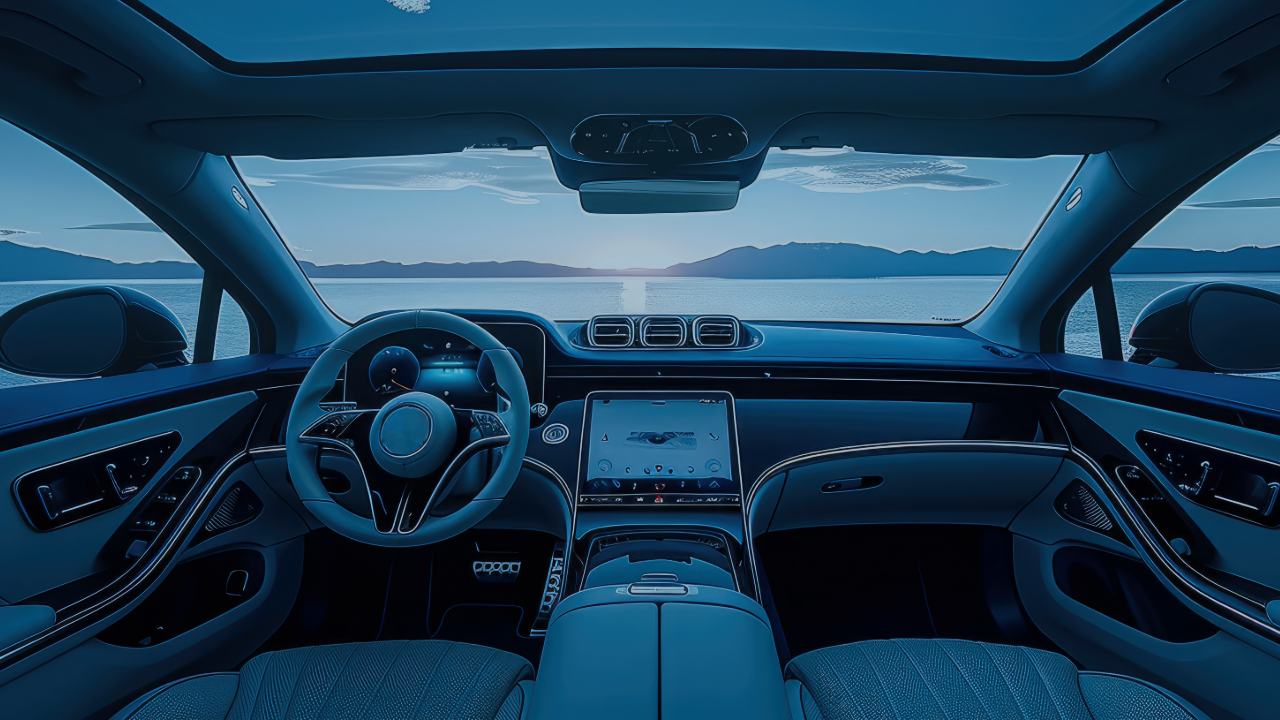
We are buying horsepower and treating the human as a safety feature.
Pilot projects look safe because they are small. Scale is where the cost overruns, the security exposure, and the unreliable outputs surface. And leaders are responding to AI risk the way they have responded to every technology risk before it: more controls, and a person kept in place to catch what the controls miss.
The industry has a name for that person's seat: "human in the loop." Keep someone in the driver's seat, ready to grab the wheel when the system fails.
The assumption sounds right. It isn't. BCG's guidance for scaling AI puts 10% of the effort on algorithms, 20% on data and infrastructure, and 70% on people and processes. The engine is the small number. So ask where your AI effort, investment, and risk thinking are going. If the answer is the engine and the equipment that protects the people around it, the ratio is upside down.
We are spending to protect the driver in the seat. The job is to promote the driver out of the car.
THE IDLE DRIVER
More than forty years ago, human factors researcher Lisanne Bainbridge named the irony at the center of automation. We automate because we don't trust people to do the work reliably. Then we assign them a job human attention cannot sustain: watching a system that rarely fails, waiting to catch it when it does. And the less they do the work, the less able they are to step in when it matters. That is Judgment Debt, compounding quietly.
This is the idle driver: a person kept behind the wheel while something else drives. The idle driver is still part of the machine, a backstop ready to take over, monitoring moment to moment. Researchers at Microsoft and Carnegie Mellon now describe the same ironies in generative AI work. Anyone whose job is reviewing AI output sits in this seat, and given enough clean runs, attention drifts.
In 2018, an Uber test vehicle under automated control struck and killed a pedestrian in Tempe, Arizona. The operator in the driver's seat was not watching the road. Federal investigators named her distraction as the probable cause. They also found the company had no adequate way to address what they called automation complacency, and traced that gap to its safety culture. The driver was a backstop, and the system around the driver assumed the backstop would hold.
None of this is an argument against AI. It is an argument about where the human sits.
What organizations build instead is the Determinism Trap: rules-based controls wrapped around probabilistic systems, with a person stationed at the end to catch what slips through. In driving terms, those controls are airbags. Airbags matter. But no airbag ever made anyone a better driver.
FROM THE DRIVER'S SEAT TO THE OWNER'S BOX
Think about a race team. Nobody wins by funding the engine alone.
Airbags are equipment. Guardrails, containment, and monitoring protect the driver. They are necessary, and they promote no one.
The driver sits in the car with hands on the wheel, operating the work. This is the seat AI is taking. As organizations grant AI more agency, moving along the Agency Continuum from Intern to Collaborator to Agent, the system does more of the driving.
The navigator works outside the car. In NASCAR, that is the crew chief, calling strategy from the pit box. The navigator watches the whole race, sees what the driver cannot, and adjusts the strategy as conditions change. This is the first stage of Human Over the Loop, and judgment compounds here because it is exercised every lap.
The difference between the idle driver and the navigator is not whether they watch. Both watch. The idle driver watches for the next failure and is ready to grab the wheel. That is tactical, and it is inside the machine. The navigator watches the race and changes the plan. That is strategic, and it is over the machine. The same test applies to every sign-off in your AI governance. Keep the approval gates; high-impact, irreversible decisions should still require a human yes. The question is who holds the gate. If the person signing can change the plan, they are navigating. If they are just clearing a queue, they are becoming an idle driver.
The owner sits outside the race entirely. This is the highest level of Human Over the Loop: orchestration across every race. The owner decides why the team races, funds it, staffs it, and answers for the result.
As AI takes the wheel, people do not leave the race. They should move up. Individual contributors move from driver to navigator. Leaders move to the owner's box. Up and out of the car, not off the team.
That is Human Over the Loop. The navigator directs and validates. The owner orchestrates and is accountable. Neither is a component inside the process. Gartner's governance guidance points the same direction: it advises that every autonomous action should trace back to a responsible human owner. The open question is whether we are developing people who can hold that seat, or just keeping them in the car.
WHAT CHANGES WHEN THE HUMAN MOVES UP
For the individual, in a 2025 Microsoft Research and Carnegie Mellon survey of 319 knowledge workers, those who reported higher confidence in AI also reported less critical thinking, while those confident in their own ability reported more. A seat that only asks people to check the machine's work does little to build the confidence the navigator's seat requires.
For the team, trust is modeled, not mandated. Navigators model judgment out loud. Idle drivers can only react to failure.
For the organization, look at your last scaling sign-off. It likely certified cost, value, data provenance, and controls. It certified the vehicle. Did it certify the people in it?
For the economy, this is the Scarcity Inversion. When AI makes intelligence abundant, human judgment becomes the scarce asset. Spend that judgment as a containment cost and you deplete the one thing AI cannot replace.
THE LEADERSHIP SHIFT
This is not a technology problem. It is a leadership problem.
Look at where new money is headed. In Gartner's 2027 CEO Survey of 203 CEOs and senior executives, 75% plan to increase investment in technology, data, and IT, including AI, and 28% plan to increase investment in legal, risk, security, and resilience. That is the engine and the airbags. Neither line is the move up.
Funding the move up buys what controls cannot: confidence in the system, and human judgment that scales over the loop instead of being spent inside it.
AI never removes responsibility. It concentrates it. An idle driver is accountable for catching mistakes. An owner is accountable for outcomes. Leaders who keep their people in the driver's seat as backup have not managed AI risk. They have relocated it to the one place it is hardest to catch.
An owner who funds only the engine does not have a race team. So where is your 70% going?
BEFORE YOUR NEXT PILOT PROJECT SCALES
Three moves, before any AI initiative earns enterprise capital. Start with the map; the other two follow from it.
- Map the seats. Step by step, show where the human sits and what agency the system is granted. Any step where a person is only waiting to catch a failure is an idle-driver seat. Redesign it into a navigator seat: give that person the context and authority to change the plan, not just stop the car.
- Name the owner. Put a named process owner in the sign-off, someone accountable for outcomes and not just controls.
- Fund the move up. Give the human transition its own budget line, measured against the engine, not left as a residual of tool spend.
Airbags protect the driver. They don't promote the driver.
When AI becomes abundant — what will make you indispensable?
ABOUT THE AUTHOR
Scott Wise brings 30 years of transformation consulting experience to the most important leadership challenge of our time. Author of AI4Leaders: Amplify Your Impact and certified in AI by MIT and Oxford, he helps executive teams and organizations move from AI-Curious to AI-Capable. Explore his work at ScottWise.ai.